Risk-Reward Ratio
The Risk-Reward Ratio is a measure used by traders and investors to compare the potential profit of a trade with the potential loss. It helps evaluate whether a trade is worth the risk.
Detailed Explanation
The Risk-Reward Ratio (often abbreviated as R:R or R/R Ratio) quantifies the relationship between the expected risk and the potential reward of a trade. It is calculated by dividing the amount of potential loss (risk) by the amount of potential gain (reward).
Formula:
Risk-Reward Ratio = Potential Loss / Potential Profit
For example, if a trader risks $100 to potentially earn $300, the risk-reward ratio is 1:3.
This ratio is a key tool in risk management. It ensures that traders only enter trades where the possible return justifies the risk. A commonly used benchmark is 1:2 or higher — meaning the trader aims to make twice as much as they are willing to lose.
The Risk-Reward Ratio is also useful when combined with a trader’s win rate (how often they win). Even with a lower win rate, a trader can be profitable over time if they maintain a favorable risk-reward setup.
However, the ratio alone does not guarantee profitability. Market conditions, execution timing, and strategy discipline are also essential.
Significance for Investors
Understanding and applying the Risk-Reward Ratio is crucial for long-term success in trading. It prevents emotional decisions and promotes consistent, disciplined trade setups.
By defining both risk and reward before entering a position, investors can better manage their capital and avoid large losses. It also helps set realistic profit targets and stop-loss levels.
Traders who ignore this ratio often take impulsive trades with poor risk management, which can lead to inconsistent performance or account drawdown.
Successful traders usually stick to pre-defined risk-reward criteria in every trade, adapting only when market conditions clearly justify it.
Examples
A trader plans to buy shares of Company XYZ at $50. They set a stop-loss order at $48 (risking $2 per share) and a take-profit level at $56 (aiming for $6 gain per share).
Risk = $2, Reward = $6, so the Risk-Reward Ratio = 1:3. This means for every $1 risked, the trader aims to gain $3 — a favorable setup.
Comparison with Similar Terms
Position Sizing:
Works together with the risk-reward ratio to determine how many units to trade safely.

Discover a comprehensive glossary of essential trading terms that every investor should know. Explore detailed explanations of key concepts, from basic definitions to in-depth insights
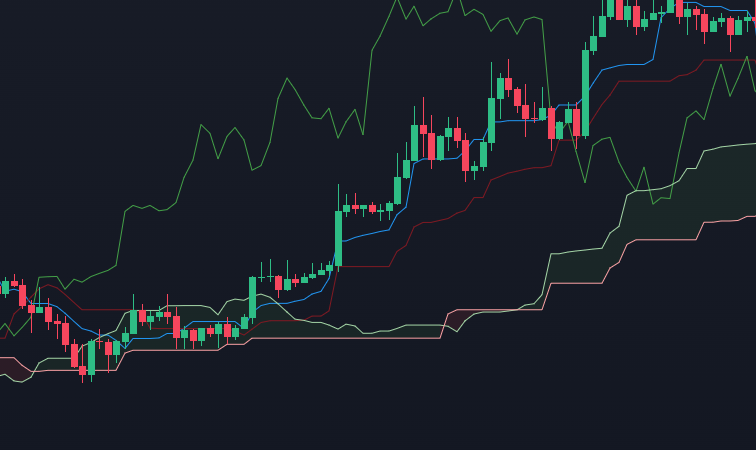
Delve into detailed explanations of the most important technical indicators used in trading. Designed for traders of all levels, our curated list will help you interpret market signals, make informed decisions, and enhance your trading skills
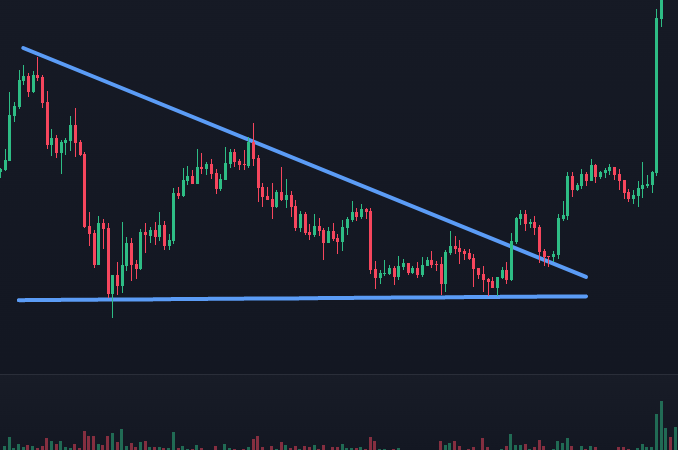
Access detailed explanations of key chart patterns used in technical analysis. Perfect for traders at any level, our extensive collection will help you recognize market trends, make informed decisions, and refine your trading strategie
Disclaimer
The information provided on this website is for educational and informational purposes only and should not be construed as financial advice. We do not guarantee the accuracy, completeness, or reliability of any information presented. Any actions taken based on the information found on this website are strictly at your own risk. Always seek the advice of a qualified financial professional before making any investment decisions. We disclaim any liability for any losses or damages incurred as a result of using this website.